
How much will a rooftop lighted sign cost in Geneva in 2026?
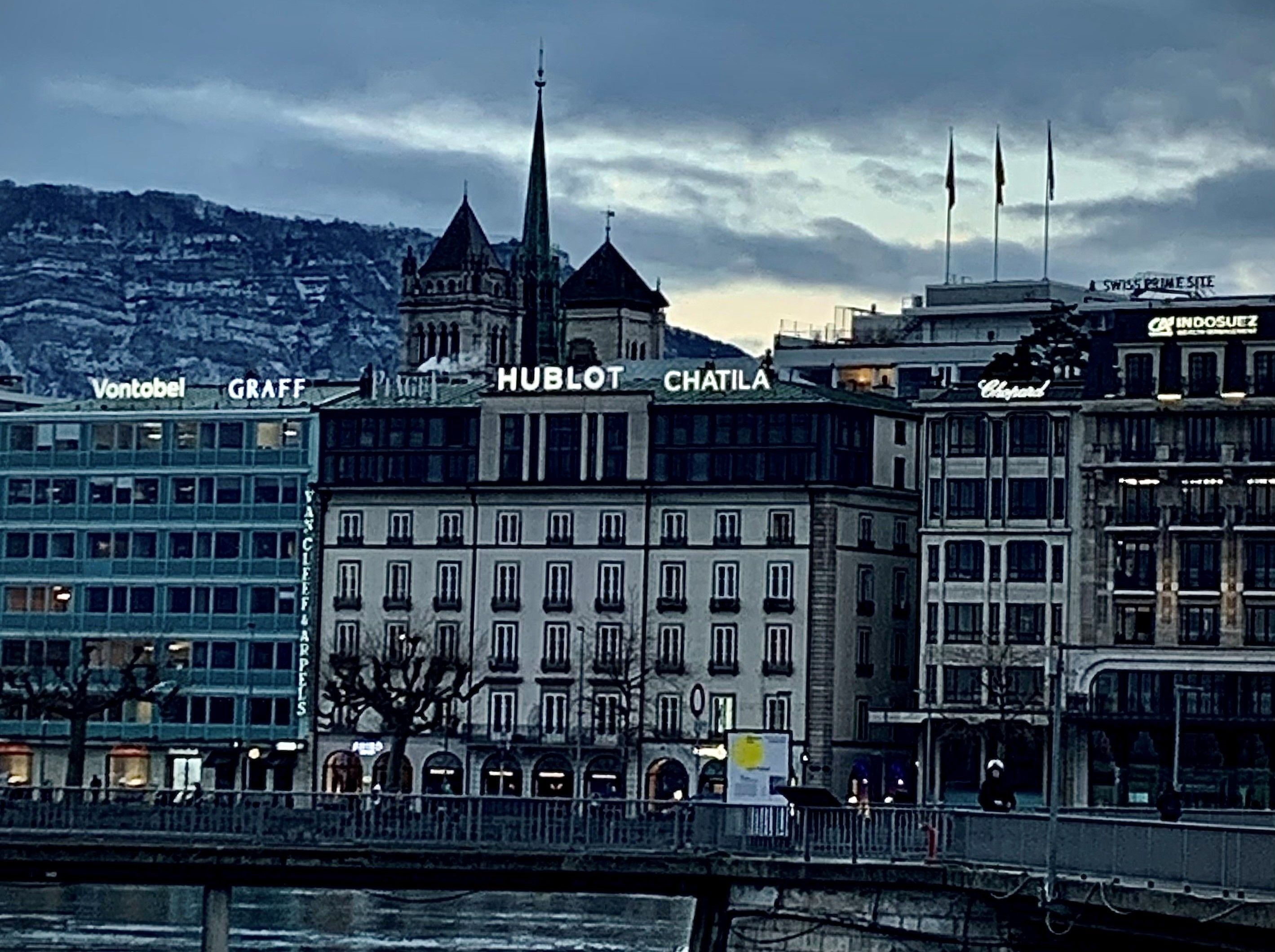
The cost of a rooftop illuminated sign in Geneva depends on a number of factors that can be divided into three main categories: pre-installation, installation, and post-installation. And unlike a traditional advertising campaign, each project is unique and depends on several factors: location, sign size, the building’s technical constraints, visibility, and the lease term.
The cost of manufacturing and installation
According to information provided by leading Geneva-based specialists in the sector, the cost of manufacturing and installing a rooftop LED sign generally ranges from CHF 25,000 to CHF 35,000. This is a one-time expense borne by the advertiser, although installing a rooftop sign may sometimes also require structural roof modification costs, which are normally the responsibility of the building owner.
This budget allocation includes, in particular:
- the preliminary phase of studying and preparing the application for obtaining administrative permits;
- the fabrication of the sign (letters, logo, support structure) in accordance with the design and applicable standards. Today, the materials used are primarily aluminum (for weight and corrosion resistance), LEDs (for their long lifespan and low energy consumption), and Plexiglas;
- transport and installation;
- roof and roadway safety measures.
References:
https://agencempb.ch/fr/visibilite-de-votre-marque
The annual rent
Rent often accounts for the largest portion of the investment when installing a lighted sign on a rooftop. This is because location is, of course, the key factor in advertising value. It is also because the commercial leases governing these arrangements are long-term (traditionally 5 or 10 years, renewable). And finally, because prime locations are scarce in Geneva, this scarcity obviously affects the cost, and each property owner is free to set the price they wish to charge.
In Geneva, the best locations along the harbor, with prime visibility to foot traffic, can fetch tens of thousands of francs a year. The main determining factors are:
- the building’s location in a prestigious area (the “Golden Triangle” formed by the Quais du Mont-Blanc, Gustave-Ador, and Général-Guisan)
- the building's characteristics (architectural prestige, roof length, orientation)
- the view from the Mont-Blanc Bridge, the luxury hotels on the right bank, and the quays;
- its close proximity to the shops on Rue du Rhône, the luxury hotels, and the financial district;
- exposure to tourist traffic;
- the rarity and exclusivity of the location;
- The length of the lease may also have a marginal impact, as a longer-term commitment can lead to a slight reduction in rent (commercial leases in Geneva are traditionally signed for terms of 5 to 10 years).
Power consumption and maintenance
The associated costs related to maintenance and electricity consumption are minimal. In fact, thanks to the materials used in their design, modern signs are built to last and consume little energy. This optimal efficiency serves as a strong counterargument to critics who might question these systems in the context of greenwashing.
In any case, the signs come with a 2-year warranty; maintenance is rarely needed as long as they are well-made, and the annual electricity cost for the LEDs ranges from CHF 500 to CHF 1,000, depending on the size of the sign.
Why do brands invest so much to see their names light up the Geneva skyline?
For brands looking to establish a storefront, the issue is not simply a matter of calculating an overall cost that may seem high at first glance. However, this cost quickly proves to be very competitive when compared to other media based on objective criteria such as cost per thousand impressions (CPM), brand value, and the duration of exposure. Above all, it is essential to consider the intangible value created by such a system:
- constant visibility thanks to a presence 24 hours a day, 365 days a year, in any weather, and visible to everyone;
- enhancing brand image thanks to the exclusive nature of this medium: “Only the biggest brands can afford it”;
- A fixture in Geneva’s skyline, these brands are an integral part of the cityscape and are closely associated with the city’s identity;
- an exceptional repetition effect with a greater impact on the collective unconscious and the trust the brand inspires.
- a favorable impression among the public, who appreciate the atmosphere created by the neon signs and their reflections on the waters of the lake and the Rhône
Unlike digital campaigns, which require constant reinvestment, a rooftop sign continues to make an impact day after day for several years.
How can I get a realistic estimate?
In this environment, where there are no set rules, the best approach is to work with a specialist to develop a customized plan that takes into account your communication goals, available budget, target audience, and—consequently—the desired neighborhoods, as well as the logo’s design constraints.
It is precisely to help brands bring their projects to fruition while avoiding administrative and financial pitfalls thatAgence M.P. Berthoud brands seeking to secure the most prestigious locations in Switzerland for over sixty years.
Explore our services:
https://agencempb.ch/fr/visibilite-de-votre-marque
Learn more about illuminated signs:
https://agencempb.ch/fr/blog-fr/ooh-enseignes-lumineuses
A modern LED sign typically consumes up to 80% less energy than a traditional neon sign (source: Signknights: https://www.signknights.com/led-vs-neon-signs-which-is-better). In addition to lower operating costs, LEDs generate less heat and have a longer lifespan.
The use of durable materials and high-quality craftsmanship ensures that modern signs have a very long lifespan and require virtually no maintenance for many years. The duration of the roof space lease therefore depends on the lease agreements for these premium locations. These are commercial leases that typically last 5 to 10 years and are renewable. This extended term allows brands to maximize their initial investment.
In principle, anyone can install a rooftop sign, provided that the building owner agrees and the business is not in a regulated sector—such as tobacco or alcohol—where advertising is restricted.
There are no hard and fast rules, and the cost of a parking space ultimately depends solely on the owner’s discretion, as they are free to set the rent. However, there are trends that vary by area. The rooftops along Quai Général-Guisan, on the Petite Rade—visible from the Pont du Mont-Blanc and just steps away from the luxury boutiques on Rue du Rhône—are certainly the most expensive spots to rent in Geneva. This is especially true since all available spots are currently occupied, meaning there is a premium on rent whenever one becomes available.
Areas such as Quai Gustave-Ador, Quai des Bergues, and Quai du Mont-Blanc see heavy foot traffic and are also in high demand.
Other areas, such as the Plainpalais Plain, have no rental value despite the presence of retail establishments, since these are intended for cultural rather than commercial purposes.
This isn’t entirely true, since anyone can open a store as long as they comply with regulations and are willing to pay the price. However, it is primarily major watch brands such as Rolex, Patek Philippe, Richard Mille, Audemars Piguet, Dior, and Tissot, as well as banks like Vontobel, Edmond de Rothschild, Cembra, BCGE, and Deutsche Bank, that dominate these locations. They all have long-term brand awareness goals rather than seeking an immediate return on investment, which is what promotional campaigns on digital media typically offer.
This is a metric that is difficult to quantify, unlike digital media, where advertisers pay per click or per view, depending on the precision of the targeting. With billboards, some targeting is possible by selecting more or less prime locations frequented by the target audience. However, it is more of a mass medium whose impact relies on the permanence and repetition of exposure. Effectiveness here is measured primarily in Cost Per Thousand (CPM). Outdoor advertising, with its very broad audience, benefits from a very low CPM compared to other advertising media.
It is therefore clear that the Geneva Lagoon and its Golden Triangle are the most sought-after locations for establishing a retail presence, as they benefit from very high foot and vehicle traffic and attract the vast majority of tourists visiting Geneva. The impact of a store in this premium area can be estimated at over 40 million annual contacts (the Mont-Blanc Bridge alone handles nearly 57,000 vehicles per day, Cornavin Station welcomes over 100,000 travelers, some of whom will cross the bridges on foot, not to mention the ever-growing tourist clientele, with a record 3.85 million overnight stays recorded by Geneva Tourism in 2025).


