
Illuminated Signs vs. Digital Signs
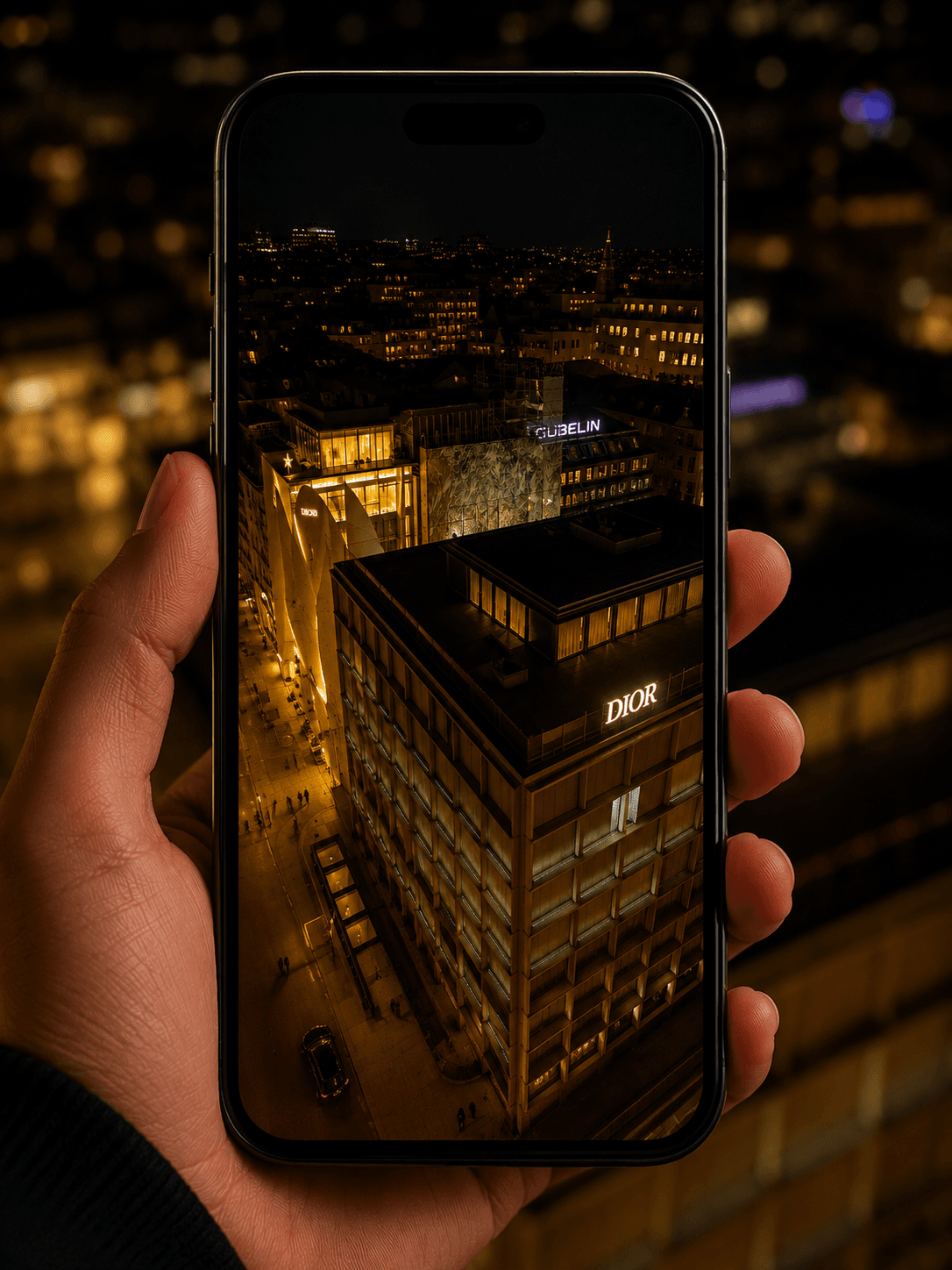
Two communication channels that are complete opposites. And yet…
And yet, in 2026, even though digital media is taking up an increasing share of advertising spending, an effective media mix must rely on the synergy between these durable physical formats and the responsiveness of digital and social media. And this is true even though it remains difficult to compare view counts and click-through rates with the lasting impact a brand has on the collective unconscious.
Here is a detailed analysis of the strengths and weaknesses of this strategy:
1. OOH (Roof-mounted signs)
- 24/7 visibility and impact: Roof-mounted signs, particularly in Geneva (the harbor, the airport, train stations), offer “permanent” visibility and high advertising impact, uninterrupted by passersby. Day or night, in any weather.
- An image of prestige and trust: In Switzerland, rooftop signs are icons associated with luxury and stability (watchmaking, finance), reinforcing a brand’s credibility. They symbolize solidity and prestige, in contrast to digital media, which is consumed instantly and is often perceived as intrusive.
- Local presence and brand recall: These media resonate in urban public spaces. Various studies on media impact confirm that outdoor advertising has a high recall rate. The more frequently the brand is seen, the more familiar it becomes.
- "Non-skippable": Unlike an ad on YouTube or Instagram, a physical sign cannot be blocked or skipped, ensuring exposure.
- Appeal: Out-of-home (OOH) advertising is perceived by the public as an integral part of the urban landscape. As a result, billboards are not seen as intrusive and are even viewed as having a rather appealing decorative quality, according to studies conducted among the Swiss population.
- Sustainability: At a time when everything is evaluated based on its energy footprint—and even when light pollution is a concern—roof-mounted advertising signs are the most environmentally friendly form of communication thanks to energy-efficient LED technology. This stands in contrast to the excessive energy consumed by data centers and the overwhelming number of devices required to display online advertising.
2. Weaknesses and limitations of permanent OOH
- High cost and long-term commitment: Premium locations (e.g., the Geneva Harbor, managed by agencies such as M.P. Berthoud) require substantial budgets and long-term leases, limiting flexibility. However, when calculated on a cost-per-thousand (CPM) basis, OOH advertising—and billboards in particular—are among the least expensive media options.
- Limited ability to target specific audiences: Roof-mounted signage reaches a broad audience but does not allow for the detailed behavioral or demographic targeting offered by social media. However, some targeting is still possible based on the signage’s location. While it won’t allow you to exclude secondary targets, it will reach priority targets known to frequent the area.
- Regulations: Switzerland, particularly in certain cities such as Geneva, enforces strict rules regarding advertising practices. The environmental impact of illuminated signs is strictly regulated by municipal and cantonal regulations and the Federal Energy Act (LEN). Furthermore, the illuminated signs on the rooftops of the Geneva Lagoon are included in the development plan for this protected area, conferring on them heritage and cultural value.
- Static message: Unlike an Instagram campaign, a digital sign cannot be updated in real time to promote a flash sale. It remains a tool for building brand awareness rather than for immediate promotion.
- Scarcity of premium locations: Rooftop locations are inherently limited and, as a result, available only to a select few. This explains why turnover is extremely low, prices are relatively high, and the best locations are monopolized by a handful of prestigious brands.
3. Perspective in a Mixed Media Context (Including Digital and Social Media)
By 2026, OOH will no longer be used in isolation but will instead serve as a complementary component of a brand’s media mix. It functions as a “top-of-funnel” (brand awareness) channel that feeds into the “bottom-of-funnel” (conversion) of digital marketing.
- Out-of-home advertising builds trust where digital advertising leverages it: Roof signs generate the brand awareness needed for social media ads to be recognized and clicked on.
- Brand Safety: In an environment marked by mistrust of online content, brick-and-mortar stores offer a guarantee of "brand safety" and reliability, counterbalancing the volatility of social media. They enjoy a high level of public goodwill.
- Hyper-localization and Data (Retargeting): The trend is to use mobility data (crowd movements) to link outdoor advertising with smartphone campaigns. A passerby who sees a sign may receive an advertising notification on their phone.
In summary: the Swiss mix
Roof-top signage in Switzerland serves as a prestigious branding asset (building lasting brand recognition), while digital advertising is the performance driver (delivering immediate results). For an optimal mix, a brand seeking to establish itself in the landscape would be well advised to maintain a long-term presence at the most iconic locations in urban centers (such as the skyline around Geneva’s Lake Geneva) while running targeted, timely digital campaigns using the same visual language to maximize recognition and impact. This is something the leading luxury, watchmaking, and financial firms have understood very well; they dominate the rooftops of Geneva and operate boutiques just a few steps away, on the famous Rue du Rhône or in the Banking District.
For more information on out-of-home (OOH) advertising and rooftop illuminated signs, you can download the white paper from Agence M.P. Bertoud here. Based in Geneva, the agency has been a leader in managing signage projects with advertisers and property owners for over 60 years.
Because they offer exceptional visibility while reinforcing the image of prestige and stability associated with the city. Signage is a unique way to consistently reach both leisure and business travelers, as well as the local population.
The two complement each other in a well-structured media mix, and their effectiveness depends on the objective. Signage has a long-term impact and significantly strengthens brand recall. Digital advertising aims for an immediate and measurable targeted impact.
The total cost depends on the location, size, and duration of use. It is important to distinguish between the one-time cost of manufacturing and installation, which can range from CHF 25,000 to CHF 35,000 depending on the size of the sign and the safety measures required during installation. Then there is the annual rental cost, which depends on several factors but generally amounts to tens of thousands of francs per year.
No, signage regulations for rooftops are highly regulated in Geneva, particularly within the protected area of the Rade. Installing a sign involves a fairly lengthy and complex administrative process involving the City’s Planning Department, the Commission for Monuments, Nature, and Sites, and the Police Department. The average time required for installation, including administrative procedures, manufacturing, and installation, generally ranges from 3 to 6 months. This is why it is strongly recommended to consult a specialist such asAgence MP Berthoud for more information, visit https://agencempb.ch/fr/nos-services).


